.png)


Together for Justice: Inter-Religious Dialogue for Peace and Non-violence in Archdiocese of Bangalore

Updated: Oct 3, 2025

In October 2025, as the world marks Gandhi Jayanthi and the Jubilee Year commemorating the 60th anniversary of Nostra Aetate, the Commission of Inter-Religious Dialogue (IRD) of the Archdiocese of Bangalore hosted a landmark gathering at Paalanaa Bhavana, Bishop House, Nandidurga Road. The event, themed “Peace, Justice and Non-Violence,” framed interfaith dialogue not as a mere series of meetings but as a vital global spiritual movement. It echoed Pope Francis’ call to build a more harmonious world through collaboration among religions and communities, aligning with the broader intention of fostering peace, justice, and non-violence.

A Ceremony of Unity: Rituals and Readings Across Faith Traditions
The gathering began with a distinctive diya lighting ceremony, inviting participation from representatives of multiple faith traditions. This ritual, along with holy readings from Hindu, Muslim, and Christian scriptures, offered a powerful visual symbol with diverse religious paths converging on universal values of love, respect, peace, and justice. The visual tableau underscored a practical conviction—interfaith cooperation is possible and necessary in a world divided by political, ethnic, and religious lines.
Youth and lay participants from all walks of life joined seasoned clergy and community leaders, signalling a cross-generational commitment to peace through dialogue and mutual understanding. The presence of young people highlighted the event’s forward-looking aim: to cultivate a generation trained in dialogue, empathy, and collaborative action.
Special Virtual Messages:
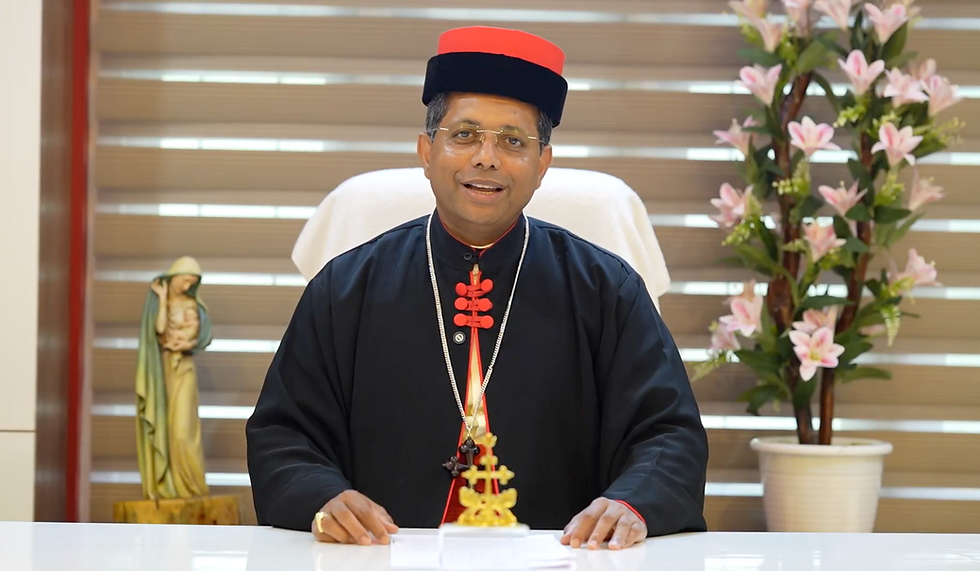
His Excellency Cardinal Koovakad highlighted the theme “Working Together for Peace, Justice, and Non-Violence,” reflecting Gandhi’s vision. Honouring St. John Paul II and citing Pope Benedict XVI, he urged fostering respect, trust, forgiveness, and solidarity across faiths. Such unity makes us proactive agents of change, building a just, peaceful world.

Most Rev. Bishop Susainathan stressed interfaith dialogue as a path to unity, compassion, and peace. Inspired by Gandhi, Mother Teresa, and Pope Francis, it values shared truths, service, and love, fostering stronger, respectful, and harmonious communities.

Voices Across Faiths: Key Addresses and Perspectives
A central feature of the day was the array of addresses from leaders representing India’s diverse religious landscape. Each speaker brought a distinct emphasis, yet all converged on a shared goal: peace through justice and interfaith cooperation.
Rev. Dr. Denzil Fernandez S.J., a noted Jesuit priest, delivered a keynote that stressed spiritual collaboration as essential to peacebuilding. He connected the Pope’s Leo IX October intention with a broader call for cooperative dialogue among different religions, presenting it as a wellspring of hope. Dr. Fernandez also highlighted the critical role of youth and urged institutions to host and support interfaith dialogues, turning conversations into concrete actions that advance peace.
Shri Shivarudra Swamiji, Bellimatta, reminded attendees of Vasudhaiva Kutumbakam—the world as one family. Drawing on ancient wisdom, he spoke of oneness amid diversity and the spiritual unity that underpins respectful coexistence with other faith traditions.
Moulana Syed Mohammad Ibrahim offered a message of compassionate action and solidarity, encouraging movement beyond doctrinal differences toward shared ethics rooted in justice and kindness.
Mr. Sheryar Vakil, representing the Parsi community, shared insights on Zoroastrian values of truth, righteousness, and community service as cornerstones of interfaith understanding.
Ms. Malini Jain, SP, representing Jainism, spoke about ahimsa (non-violence) and peaceful coexistence, emphasizing practical collaboration for peace.
Harjinder Singh Bhatia, representing the Sikh tradition, reaffirmed values of equality, justice, and community service, urging active participation in fostering social solidarity.
Bhante Anand, from the Buddhist tradition, highlighted mindfulness, compassion, and interconnectedness, stressing that personal spiritual practice can lead to universal harmony.
Sister Shanthi, from the Brahma Kumaris, emphasized meditation and inner transformation as bridges to inter-religious harmony.
His Grace Archbishop Peter Machado of Bangalore closed the sequence with a call for active love and service toward neighbours of all faiths. He urged the faithful to overcome prejudice and build social cohesion through dialogue, underscoring that religion, when misunderstood or misused, can fuel hatred; when guided by compassion, respect, and justice, it becomes a powerful force for unity. In a world facing divisions, political, ethnic, or religious, the event reiterated a central conviction: dialogue is not a luxury but a necessity.

The Anthem: A Unifying Expression
An anthem released by the IRD was presented as a symbolic articulation of its vision and mission. The piece aims to inspire long-term commitment to peace, justice, and non-violence by providing a shared musical identity for participants from various faith communities. The anthem’s lyrics and music serve to galvanize action and sustain motivation across diverse groups, reinforcing communal values during gatherings and outreach efforts.
Youth Leadership: “Investing in Tomorrow’s Peacemakers”
A notable highlight was IRD’s emphasis on youth leadership. The commission has been investing in programs that empower younger generations to embody the principles of peace and justice. Recent initiatives included interfaith activities for children and youth, with essay competitions conducted in Kannada and English and Rangoli contests designed to engage students creatively with the theme of Embracing Togetherness. Across 17 institutions and nearly 200 students participated, indicating a strong readiness among young minds to contribute to a more harmonious society.

Several institutions were recognized for their achievements in these competitions, with St. Charles Women’s PU College earning multiple trophies. The Resurrection Church’s youth groups, led by Fr. Pavan Anthony, organized creative performances—dance and skit, depicting the life of Jesus from birth to crucifixion. The St. Pius Church youth also contributed to event management, underscoring the important role of youth in sustaining interfaith efforts.
The IRD expressed heartfelt appreciation for these contributions and expressed eagerness to involve church youth groups more deeply in future initiatives. The overall message was clear: empowering youth is essential to keeping peacebuilding dynamic, ongoing, and relevant to future generations.
Celebration, Gratitude, and a Call to Continuity
The day culminated with a vote of thanks delivered by Rev. Fr. Arun Balraj A., Secretary of the Inter-Religious Dialogue Commission. He expressed deep gratitude to all who contributed to the event’s success and emphasized the importance of sustaining the commission’s work. Fr. Balraj issued a call for continued support from religious, social, and community organizations to strengthen collective efforts in building peace, justice, and harmony in society. The closing remarks reaffirmed that interfaith collaboration is foundational to lasting peace.
A Shared Vision for a Diverse World
In the contemporary moment, where divisions frequently make headlines, the event in Bangalore stands as a reminder that dialogue, compassion, and cooperation are not only ideals but actionable commitments. The participants’ collaboration across faiths provides a model for other communities seeking to translate interfaith dialogue into tangible, positive social impact.



Comments